Are you a Blackpool business owner curious about SEO, or “Search Engine Optimisation,” and how it can impact your online presence?
SEO may sound like a technical term, but it simply refers to optimising your website to rank higher on search engines like Google, Bing, and Yahoo.
For businesses in Blackpool, having a strong online presence is crucial, especially as more consumers search for local services and products online.
In this FAQ, we’ll cover the most important questions about SEO for Blackpool Businesses, from how it works to why it matters and how it can benefit your business.
1. What is SEO?
SEO, or Search Engine Optimisation, is the practice of improving your website’s visibility on search engine results pages (SERPs).
When someone searches for a product, service, or information, search engines like Google show a list of websites that best match the query.
SEO involves various strategies to ensure your website ranks higher on this list.
This includes optimising website content, improving page speed, building backlinks, and targeting relevant keywords.
The ultimate goal is to attract organic (non-paid) traffic, increase website visibility, and drive more users to your site.
2. How Does SEO Work?
SEO works by aligning your website’s content and structure with search engine algorithms.
These algorithms scan and index websites based on various factors, such as keyword relevance, quality of content, website structure, and user experience.
When your website meets these factors effectively, it has a better chance of appearing higher in search results.
SEO involves both “on-page” elements, like keywords and meta descriptions, and “off-page” elements, such as backlinks from other reputable websites.
Together, these tactics help search engines understand your website’s relevance, quality, and authority in your industry.
3. Why is SEO Important for Businesses in Blackpool?
For businesses in Blackpool, SEO is essential for reaching local customers actively searching for products or services.
With SEO, your business can appear in local search results, often in a section known as the “local pack.”
This is especially beneficial for attracting foot traffic and generating leads from users close to your business location. Furthermore, SEO helps build brand trust and credibility.
Consumers are more likely to trust businesses appearing on the first page of search results. In short, SEO brings you closer to your customers and helps create a strong digital presence in the Blackpool area.
4. What Are the Main Benefits of SEO Blackpool?
SEO offers numerous benefits, starting with improved visibility in search results.
When your website ranks higher, it’s more likely to attract visitors and potential customers. Another key benefit is cost-effectiveness; unlike paid advertising, SEO provides long-term results without ongoing payments per click.
SEO also boosts brand credibility, as users tend to trust websites that appear at the top of search results. Moreover, optimising your website improves user experience by enhancing page load speed and mobile compatibility.
Overall, SEO helps generate organic traffic, build brand awareness, and drive more conversions for your business.
5. How Much Does SEO Cost?
The cost of SEO varies widely, depending on your business goals, website size, and the level of competition.
For a small to medium-sized business in Blackpool, SEO services can range from around £200 to £2,000 per month.
Some businesses may choose a one-time SEO audit or project, which could cost between £500 and £5,000.
While DIY SEO is possible, hiring a professional agency such as DTC will mostly yield better and faster results.
Investing in SEO is generally worthwhile, as the long-term benefits of increased visibility and organic traffic often outweigh the initial costs.
6. How Long Does SEO Take to Show Results?
SEO is a long-term strategy, and while some improvements may be noticeable within a few weeks, most businesses can expect to see significant results in about three to six months.
The time frame depends on various factors, including your industry’s competitiveness, the current state of your website, and the quality of the SEO work.
Search engines need time to crawl, index, and assess changes made to your site. While SEO isn’t a quick fix, it offers lasting benefits as your site continues to improve its rankings and traffic over time.
7. What Are Keywords, and Why Are They Important?
Keywords are the words and phrases users type into search engines when looking for information.
For SEO, keywords help determine how relevant your website is to specific searches.
When you strategically include keywords that relate to your business, products, or services, it makes it easier for search engines to match your site with relevant search queries.
For example, if you’re a Blackpool coffee shop owner, keywords like “Blackpool café” or “best café in Blackpool” can attract local searchers looking for dining options.
Keywords are crucial as they directly influence your search rankings and website traffic.
8. What Are Backlinks, and Why Do They Matter?
Backlinks are links from other websites that point to your site. They act as “votes of confidence,” signalling to search engines that your content is valuable and authoritative.
The more high-quality backlinks you have from reputable sites, the more likely search engines will rank your website higher.
Backlinks are one of the main off-page SEO factors that help improve rankings, as they demonstrate that other sources find your content useful and relevant.
Building a strong backlink profile can take time, but it is essential for establishing credibility and authority in your field.
9. How Does SEO Help Improve User Experience?
SEO and user experience (UX) go hand in hand. When optimising for SEO, you naturally improve various aspects of UX, such as mobile responsiveness, fast page loading times, and easy navigation.
Google considers user-friendly websites with a positive UX to be of higher quality, which often results in better rankings. Moreover, when users find your website easy to use, they’re more likely to stay longer and interact with your content.
Good UX reduces bounce rates and improves the likelihood of conversions, making SEO and UX improvements beneficial for both search engines and users.
10. Do I Need a Professional for SEO, or Can I Do It Myself?
While it’s possible to handle basic SEO tasks yourself, hiring a professional SEO specialist or agency such as DTC is highly beneficial, especially for competitive markets.
SEO is a multi-faceted process that requires time, expertise, and ongoing adjustments.
Professionals can conduct in-depth keyword research, implement advanced SEO tactics, and monitor performance over time.
By partnering with an experienced SEO team, you can maximise your website’s potential and avoid costly mistakes.
For businesses looking to rank higher and drive more organic traffic, professional SEO services often provide better results.
11. What’s the Difference Between SEO and PPC?
SEO (Search Engine Optimisation) focuses on improving your organic rankings to attract unpaid, or “organic,” traffic. In contrast, PPC (Pay-Per-Click) advertising is a paid method where you bid on specific keywords to have your website displayed prominently in search results.
While PPC can deliver quick traffic, SEO provides long-term, sustainable results. A good digital marketing strategy often combines both, using PPC for immediate visibility and SEO for steady growth in organic traffic.
Together, SEO and PPC can help achieve maximum reach and traffic for your Blackpool business.
12. How Do Local SEO and Traditional SEO Differ?
Local SEO focuses on optimising your online presence to attract customers in a specific geographical area, such as Blackpool.
This includes targeting local keywords, managing your Google My Business profile, and acquiring reviews from local customers.
Traditional SEO, however, aims to improve overall search visibility on a broader scale, often targeting national or international audiences.
Local SEO is essential for businesses like restaurants, gyms, and service providers that rely on nearby customers, as it helps you stand out in local search results and brings in more relevant, location-based traffic.
13. How Can I Measure the Success of My SEO Campaign?
To measure SEO success, track key metrics like organic traffic, keyword rankings, bounce rate, and conversions.
Google Analytics and Google Search Console are helpful tools for monitoring these aspects. For example, tracking organic traffic will show if more people are finding your site through search engines.
Monitoring keyword rankings lets you know if your target keywords are moving up in search results.
Additionally, conversions show whether your SEO efforts are driving actual sales or leads. Regular reporting helps ensure your SEO campaign aligns with your goals.
14. What’s the Role of Content in SEO?
Content is at the core of SEO. High-quality, relevant content helps attract users, answers their questions, and encourages them to engage with your website.
Search engines prioritise websites with valuable content that aligns with user intent. Blog posts, articles, and service pages with well-researched keywords and helpful information can improve your site’s rankings.
Regularly updating your website with fresh content also signals to search engines that your site is active, which can positively impact rankings.
Content plays a dual role, enhancing both SEO and user engagement.

15. Is SEO a One-Time Effort, or Does it Require Ongoing Work?
SEO is an ongoing process rather than a one-time task. Search engines regularly update their algorithms, and your competitors are continually optimising their websites, so maintaining good rankings requires continuous effort.
Ongoing SEO includes tasks like publishing fresh content, building new backlinks, and refining technical elements.
By consistently improving your SEO, you can protect and improve your rankings, adapt to algorithm changes, and continue to attract organic traffic.
For a Blackpool business, investing in ongoing SEO efforts can yield sustained online visibility and business growth.
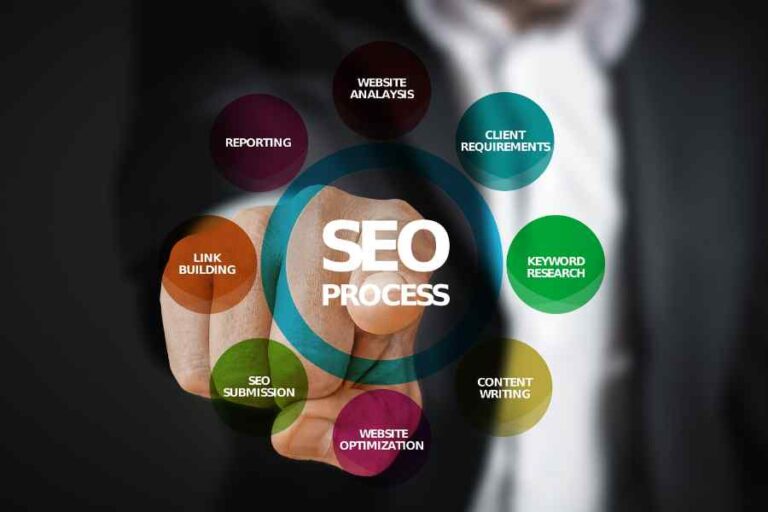
16. What is the Search Engine Optimisation Process?
The Search Engine Optimisation (SEO) process involves several steps aimed at improving a website’s visibility on search engine results pages (SERPs). The process typically begins with keyword research to identify terms relevant to your audience.
Next is on-page optimisation, where elements like titles, meta descriptions, headers, and content are enhanced to target selected keywords. Technical SEO ensures that the website is crawlable and fast-loading, with a secure, mobile-friendly design.
Off-page optimisation focuses on building backlinks from other reputable sites, while content creation plays a key role in providing valuable information to users.
Regularly monitoring and adjusting based on analytics completes the cycle, ensuring continuous improvement.
17. What is an Example of SEO?
An example of SEO could be a restaurant in Blackpool optimising its website to rank for terms like “best restaurants in Blackpool” or “Blackpool dining.”
The restaurant’s website might include high-quality content about its menu, use relevant keywords in its titles and headings, and obtain backlinks from local directories or food blogs.
By focusing on these SEO strategies, the restaurant can improve its visibility in local search results, attracting more potential customers who are searching online.
18. What are the 4 Types of SEO?
On-Page SEO: This involves optimising individual pages of a website, such as titles, meta descriptions, headings, and content, to make them more relevant to search queries.
Off-Page SEO: Off-page SEO involves activities done outside of your website, primarily building backlinks from reputable websites to improve your site’s authority.
Technical SEO: This ensures the site is easily accessible to search engines, focusing on page speed, mobile-friendliness, site structure, security, and more.
Local SEO: Local SEO is especially useful for businesses with a physical location. It involves optimising local search queries and Google My Business profiles to attract nearby customers.
19. Is Google an Example of SEO?
No, Google is not an example of SEO itself. Instead, it is a search engine that processes SEO-optimised websites. “Google’s mission is to organise the world’s information and make it universally accessible and useful” as quoted by Google.
SEO is the process of optimising a website to rank well on search engines like Google.
Google uses algorithms to rank websites based on relevance, quality, and authority, and SEO is the method used by website owners to improve their site’s ranking on Google and other search engines.
20. Do I Need SEO for My Website?
Yes, SEO is beneficial for any website aiming to reach a broader audience.
SEO helps your site appear in search engine results, which increases visibility and can lead to more visitors, leads, and conversions. Without SEO, it’s harder for people to find your website through search engines, which can limit your online growth.
SEO is particularly important for competitive markets where businesses compete for the same audience, such as local service providers, e-commerce sites, and blogs.
21. What is the Basic Knowledge of SEO?
Basic SEO knowledge involves understanding how search engines work and what they prioritise.
This includes knowing the importance of keywords (terms users search for), on-page elements (like titles, meta descriptions, and content), and backlinks (links from other sites).
It also includes understanding the significance of technical aspects like page speed, mobile responsiveness, and security.
Additionally, knowing how to use SEO tools such as Google Analytics, Google Search Console, and keyword research tools can help beginners measure and improve their SEO efforts effectively.
22. How to Find the Right Keywords for SEO?
Finding the right keywords involves a mix of tools and strategies.
Start by identifying terms that are relevant to your business, products, or services.
Use keyword research tools like Google Keyword Planner, Ahrefs, or SEMrush to get data on search volume and competition for each keyword.
Analysing competitor keywords can also provide insights into terms that might work well for you.
Prioritise keywords based on relevance, search volume, and competitiveness, aiming for a mix of broad and specific (long-tail) keywords to capture a range of search intent.